Choosing the Right Drone for Your Iceland Trip
Things to keep in mind when picking the best drone for Icelandic conditions.
Operating a drone in Iceland requires gear that can handle strong winds and comply with local flying rules. Getting aerial shots across the highlands and glacial coasts is incredible, but bringing the wrong drone can severely limit your flight time.
The Quick Takeaway:
- Wind is the main challenge: You need a heavy frame and powerful motors to maintain a steady position against the strong Icelandic winds.
- New 120-meter altitude limits: Mini drones under 250 grams are now permanently locked by software to a maximum altitude of 120 meters from your exact takeoff point, regardless of the surrounding landscape.
- Bigger drones follow the slopes: Larger drones like the DJI Air or Mavic series allow up to a 1000-meter ceiling from takeoff, meaning they can legally climb alongside rising mountain terrain.
- Flight time and efficiency: Larger drones feature higher-capacity batteries that handle cold mountain environments much better, allowing you to stay in the air longer.
- Buying locally saves money: Upgrading in Reykjavik gets you European price matching and a 14% airport tax refund, saving up to $500, depending on the model.
- Workshop schedules remain fully flexible: We adapt our routes around weather and rules so you can focus entirely on your photography.
Wind Resistance And The Ground Reality
The biggest environmental challenge you will face when flying a drone in Iceland is the wind. Coastal areas, mountain passes, and glacial valleys are prone to sudden, powerful gusts that can easily overpower a light drone. To keep your gear safe and get stable footage, you need a drone with powerful motors and a high wind-resistance rating.
- Recommended Drones:
- The DJI Mavic Series (such as Mavic 3, Mavic 3 Pro, Mavic 3 Classic, or Mavic 4 Pro)
- The DJI Air Series (such as Air 3, Air 3S, or Air 2S)
Those drones have heavier frames and motor power needed to withstand strong Icelandic winds.
The Mini Series Dilemma: Realities in the Field
If you currently own a sub-250g drone like a DJI Mini, the 120-meter software altitude restriction can be a limitation in a landscape like Iceland.
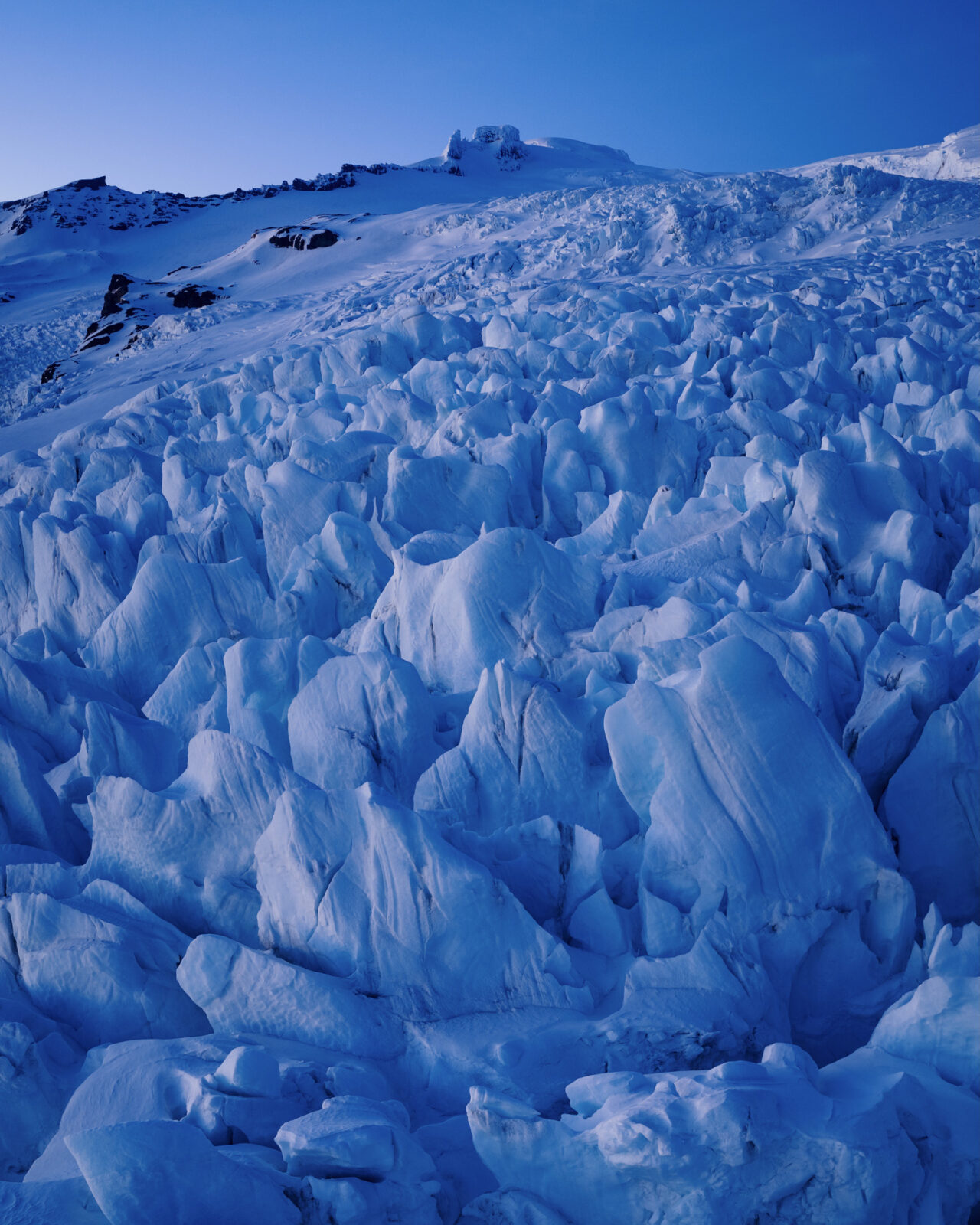
Our workshops are designed around the vertical topography of mountains and glaciers. Because a standard Mini drone is restricted by its firmware to measure height solely from its exact launch coordinate, your framing choices will be severely constrained in certain areas. If your drone refuses to climb past that 120-meter takeoff ceiling while the landscape keeps rising, you will face significant technical downtime on location.
Along with that, flight time and power efficiency become major factors in these environments. Larger drones like the DJI Air or Mavic series have higher-capacity batteries with significantly longer flight time. They handle colder temperatures and strong headwinds without draining their battery as fast. Upgrading to a larger drone before the workshop begins is always a premier, long-term investment for your landscape photography.
Finding a Solution
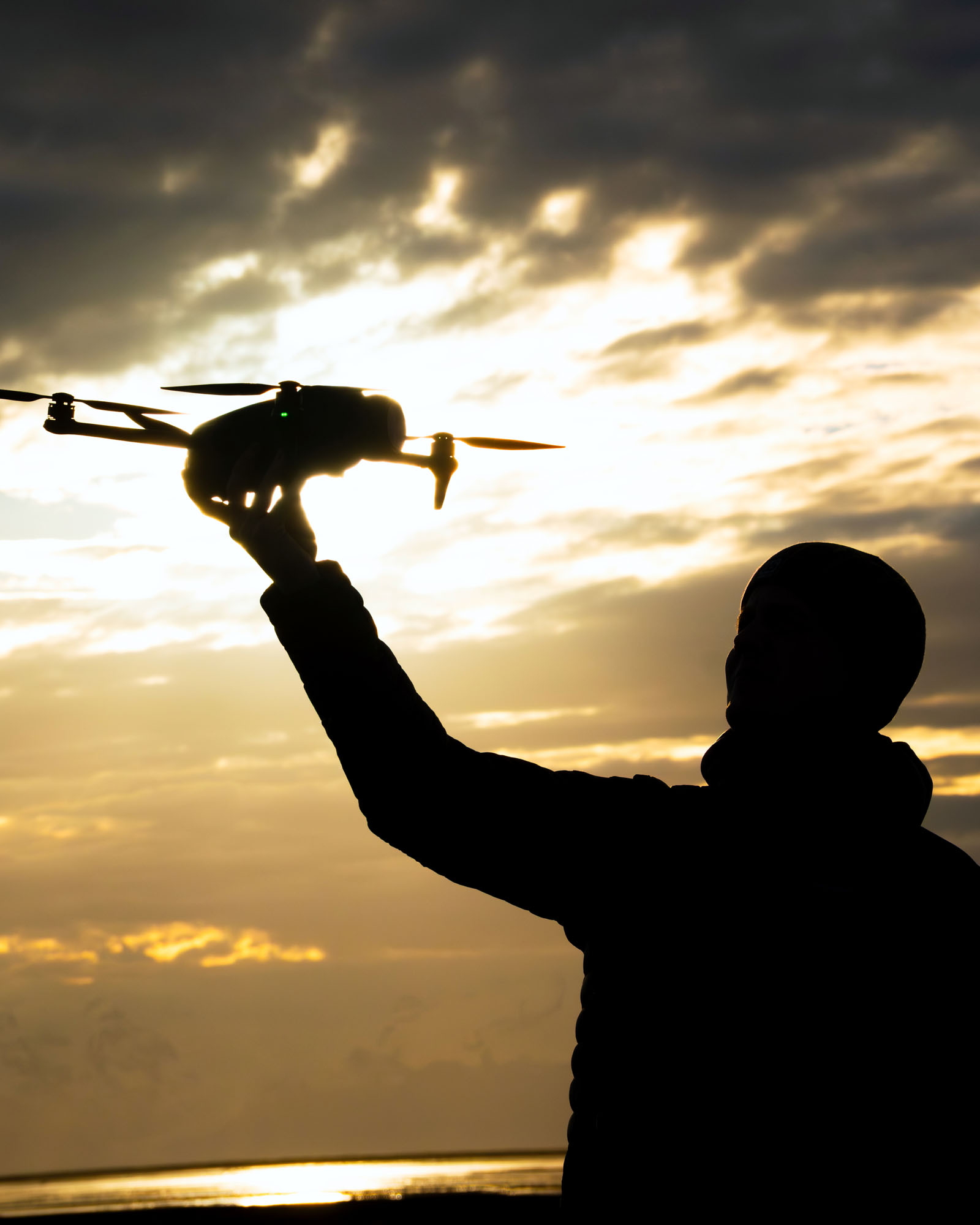
With that said, having a Mini drone does not mean you are out of options. If you own a Mini series drone and want to maximize its capabilities on your trip without buying a new drone, please reach out to us directly before your trip.
While a hardware upgrade is the ideal route, there are alternative technical solutions that can resolve these altitude constraints. If you are planning to join us with a standard Mini drone, let us know. We can discuss these operational options with you to ensure your gear is fully prepared to handle the Icelandic terrain before day one.
Bring a Camera Backup: Weather conditions in Iceland can occasionally be too intense for even the best drones. Regardless of your drone choice, always consider bringing your DSLR or mirrorless camera as a backup for ground-level shots when it is too windy to fly.
The New 120-Meter Height Limit For Mini Drones
A major change in European Union drone laws has altered how sub-250g drones behave. This software update directly impacts anyone trying to photograph mountains or glaciers.
The GPS Regional Lock: What International Pilots Must Know
Many pilots traveling from regions outside Europe, such as the United States or parts of Asia, are accustomed to flying their Mini series drones up to a 500-meter ceiling without any software restrictions. It is a common misconception that a drone purchased in an FCC-regulated zone retains its native settings globally.
In reality, modern drone firmware utilizes dynamic GPS geofencing. The moment you power on your drone in Iceland, the internal GPS recognizes that the aircraft has entered EASA (European) airspace. The software automatically applies the local CE regulatory profile, instantly dropping your firmware altitude limit from 500 meters down to a hard 120-meter ceiling.
Following Landscapes vs. Software Locks
According to official EASA and Samgöngustofa laws, you are allowed to fly a maximum of 120 meters above the landscape. This legal framework officially recognizes “Terrain Following.”
The law states that your altitude is measured from the closest point on the surface of the earth beneath the drone, not a flat horizontal line from where you stand. This means that as long as you stay 120 meters above rising ground or a slope, you can legally climb all the way up the side of a mountain or glacier.
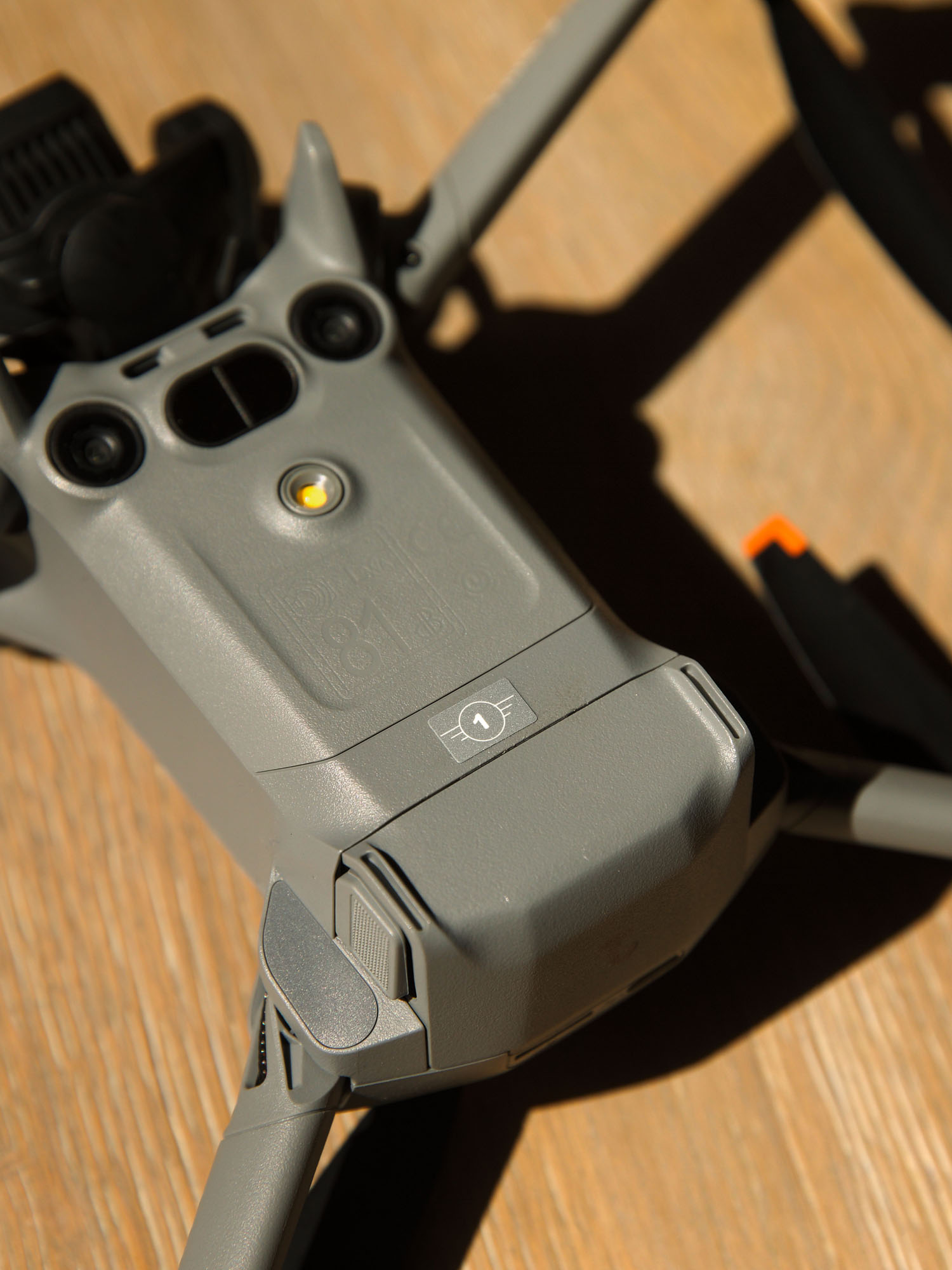
However, a new EU rule for C0-class drones (those under 250 grams) imposes a hard software limit. These drones are now strictly restricted to a 120-meter max altitude from your exact takeoff point, completely ignoring the actual topography around you.
- The Field Implication: If you launch a standard Mini drone at the bottom of a canyon or the base of a mountain, the drone will refuse to climb past 120 meters from your launch coordinate because it uses your takeoff point as its absolute barometric baseline. It becomes impossible to climb to the top of mountains and glaciers, even though staying 120 meters above the landscape is perfectly legal.
- The Larger Drone Advantage: Larger drones like the DJI Air or Mavic series are classified differently, which allows you to reach a maximum altitude of 1000 meters from your takeoff point. This firmware headroom gives you the technical clearance needed to scale massive landscapes while easily staying within the legal 120 meters from the ground directly underneath the aircraft.
C1 Reclassifications Are Stopped
Back in 2025, it was possible to go into the DJI software and reclassify your Mini drone (such as the Mini 3, Mini 4 Pro, or Mini 5 Pro) as a C1-class drone. This request removed the height lock and restored a 500-meter limit.
Because of stricter laws on C0 drones, DJI stopped allowing those C1 reclassifications. This leaves new Mini drones locked out of that extra height clearance.
Exemptions To The Rule
You are welcome to bring a sub-250g drone with extended height limits under two conditions:
- You have an older Mini series drone released before the C0 system was implemented, such as the original DJI Mini 3 Pro.
- You have a Mini drone that you successfully reclassified to a C1 class before DJI stopped allowing it.
- You have a locked C0 Mini drone – but still want to bring it? Contact us, and we can discuss a solution.
Comparing The Main Drone Options For Iceland
To help you figure out exactly how these drones stack up under real-world Icelandic conditions, we have put together a quick comparison table of the three most common models our workshop participants bring. DJI Mavic 4 Pro, DJI Air 3S, and DJI Mini 5 Pro:
| Feature | DJI Mini 5 Pro | DJI Air 3S | DJI Mavic 4 Pro |
| EU Classification | C0 Class | C1 Class | C2 Class |
| Altitude Ceiling from Takeoff | 120 meters (Hard software lock) | 500 – 1000 meters (1000m unlocks when you are further than 50km from an international airport) | 500 – 1000 meters (1000m unlocks when you are further than 50km from an international airport) |
| Official Wind Resistance | 12 m/s (27 mph / 43 km/h) | 12 m/s (27 mph / 43 km/h) | 12 m/s (27 mph / 43 km/h) |
| Realistic Wind Performance | Poor. At only 249g, it struggles to handle strong headwinds, causing the battery to deplete much faster. | Good. The 724g frame offers a solid, stable middle ground for coastal wind. | Excellent. The 1063g heavy frame holds rock-solid positions in harsh wind environments. |
| Max Transmission Range | 10 km in CE regions (Using RC 2) | 10 km in CE regions (Using RC 2) | 15 km in CE regions (Using RC Pro 2 with high-gain, multibeam antennas) |
| Battery Life | Up to 36 minutes (with the standard EU-compliant intelligent battery) | Up to 45 minutes | Up to 51 minutes |
| Realistic Flight Time Per Battery (with wind) | 15 – 18 minutes | 25 – 30 minutes | 35 – 38 minutes |
| Main Camera Sensor Size | 1-inch CMOS | 1-inch CMOS | 4/3 Hasselblad CMOS |
| Main Camera Resolution | 12 Megapixels (Note: avoid the 50MP mode as it cuts dynamic range, causes highlight clipping, and introduces artifacts) | 12 Megapixels (Note: avoid the 50MP mode as it cuts dynamic range, causes highlight clipping, and introduces artifacts) | 25 Megapixels (Note: avoid the 100MP mode as it cuts dynamic range, causes highlight clipping, and introduces artifacts) |
| Main Sensor RAW File Color Depth | 12-bit RAW DNGs (When using the 12MP mode) | 12-bit RAW DNGs (When using the 12MP mode) | 14-bit RAW DNGs (When using the 25MP mode) |
| Dedicated Telephoto Lenses | None. Features a digital 2x crop mode (48mm equivalent) from the main sensor. | 1 Tele Lens: 3x Medium Telephoto (70mm equivalent) | 2 Tele Lenses: – 2.5x Medium Telephoto (70mm equivalent) – 6x Telephoto (168mm equivalent) |
| Telephoto Sensor Size & Resolution | No dedicated sensor. Digital zoom degrades overall sharpness and line resolution. | 1/1.3-inch CMOS – 12 Megapixels native binned resolution (bypassing the 48MP marketing number) | Medium Tele: 1/1.3-inch CMOS (12 Megapixels native) Tele: 1/1.5-inch CMOS (12.5 Megapixels native) |
| Telephoto RAW File Color Depth | – | 10-bit RAW DNGs | 12-bit RAW DNGs (When using the 12/12.5MP modes) |
Buying A Drone Locally In Reykjavik
If you are looking to upgrade your drone setup before the trip, buying it in Iceland is a practical option we can easily arrange for you.
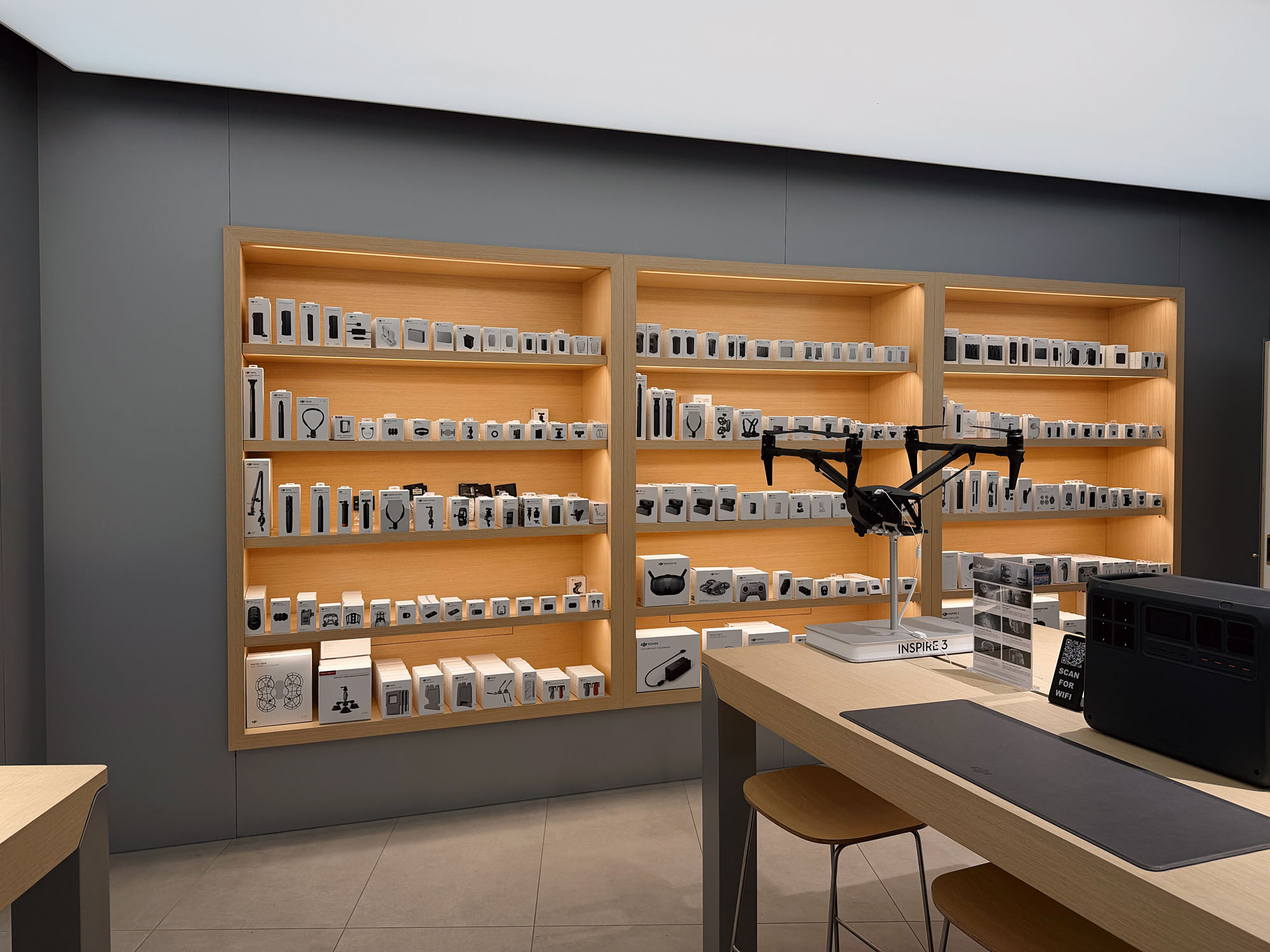
Our team works closely with the official DJI store in Reykjavik to provide an extra layer of service for our workshop participants. Through our direct contact there, we can personally arrange a local price match to standard European retail pricing (specifically matching the Swedish DJI retail baseline).
The Local Purchasing Advantage:
- Arranged Price Matching: We coordinate the EU price match and ensure the product is in stock. This service can be arranged for any DJI product, including main drone bundles, accessories, and spare batteries.
- 14% Airport Tax Refund: As an international visitor, you qualify for a 14% tax refund. This applies to travelers from any country outside Iceland, including US, Canadian, and EU residents. You simply claim the cash or card credit directly at Keflavik International Airport on your way home.
- Substantial Gear Savings: By combining our arranged price match with your airport tax refund, you can acquire an upgraded drone like the DJI Mavic 4 Pro or Air 3S for significantly less than standard retail rates in the US or continental Europe. Depending on your chosen model and bundle, this workflow routinely saves our guests up to $500.
If you plan to attend an upcoming workshop and want to secure a local upgrade, let us know before your arrival. We will handle the coordination with the store so your gear is verified, priced correctly, and ready for you to pick up.
Fly With Peace Of Mind On Our Workshops
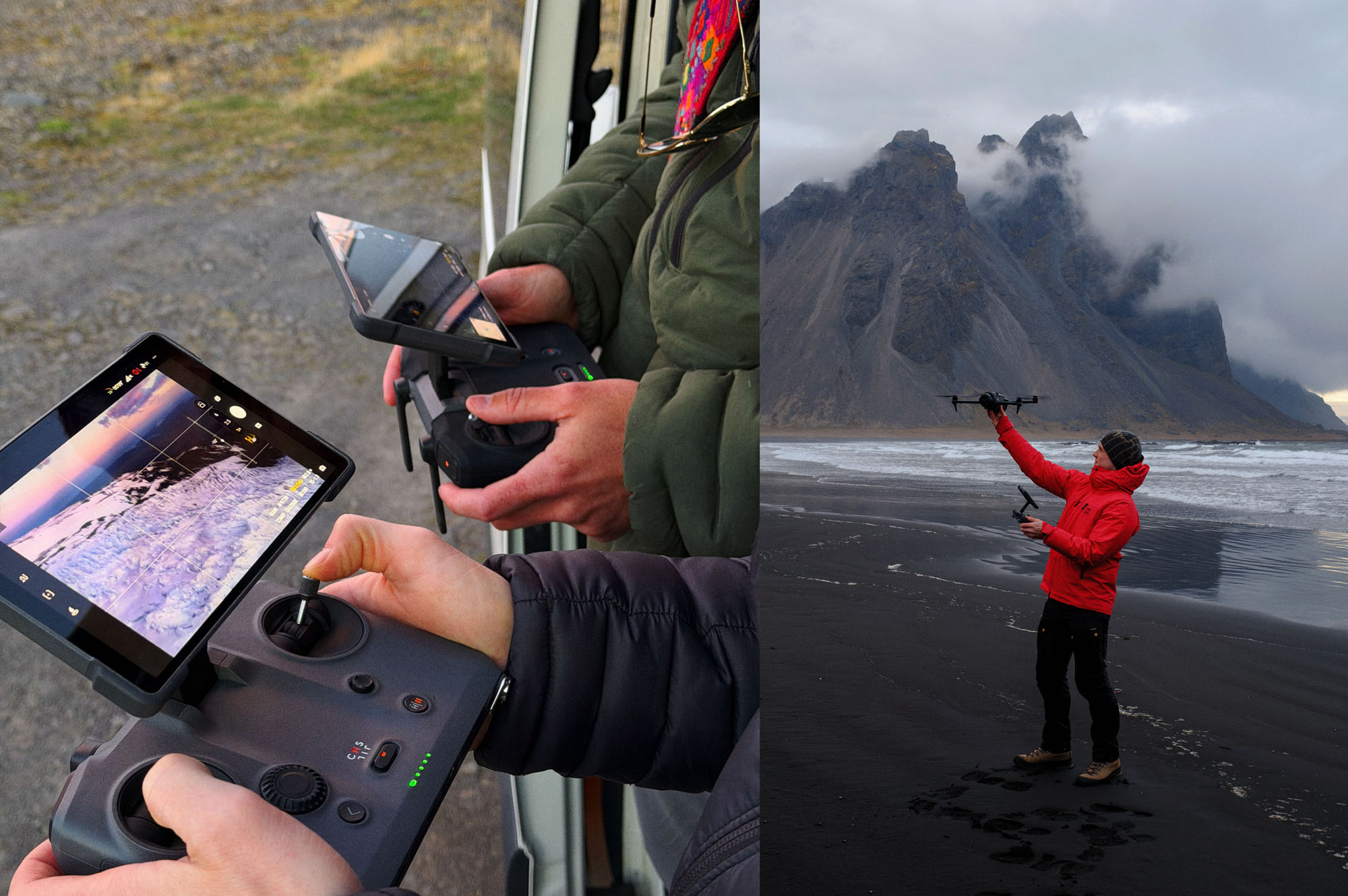
Ready to master your aerial compositions? Our dedicated drone workshops are built for exactly that purpose. We spend our time out in the field photographing Iceland’s most stunning landscapes.
Our workshops are limited to just six guests per trip, allowing our guide Hörður to work closely with everyone, teaching you how to master drone flight in unpredictable conditions, understand Icelandic weather patterns, and find the unique compositions that characterize his work. We travel in a custom-modified 4×4 Sprinter Van on 35″ tires, built to handle remote F-roads and river crossings. Because the weather dictates the light, we do not stick to rigid schedules, choosing instead to move when and where the conditions are optimized for flight.