
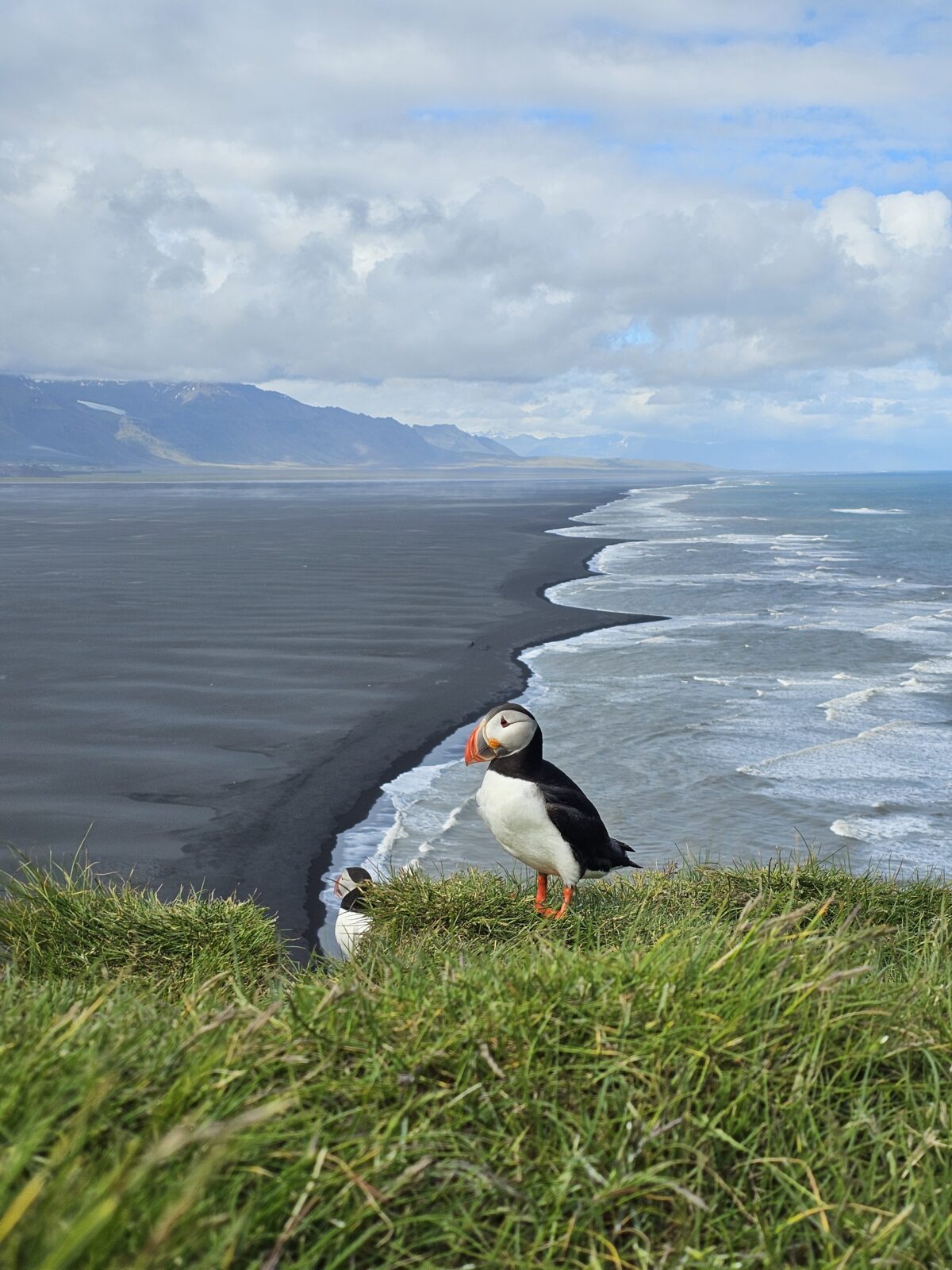

Every summer, thousands of travelers arrive in Iceland hoping to see Atlantic puffins. The good news is that seeing puffins does not require a boat tour or an expensive excursion. Many of Iceland’s largest puffin colonies are accessible by road and can be visited independently at no cost.
The challenge is knowing where to go and when to arrive. Puffins spend most of the year at sea and only come ashore during the nesting season. Timing and location make all the difference.
When are puffins in Iceland?
Puffins typically arrive in Iceland between late April and early May. They remain throughout the summer breeding season and usually depart by mid-August.
The most reliable viewing period is from June through early August.
Puffins spend their days fishing at sea and return to their nesting cliffs throughout the day. Evening hours are often the easiest time to observe them closely because many birds are gathered near their burrows.
What makes a good puffin location?
Puffins prefer steep coastal cliffs, grassy slopes, and offshore islands where predators have difficulty reaching their nests.
The best viewing sites usually share several characteristics:
- Grass-covered cliffs above the ocean
- Burrows dug into soft soil
- Limited disturbance from visitors
- Nearby feeding grounds rich in fish
Many of Iceland’s best puffin colonies can be reached without paying an entrance fee.
Dyrhólaey
Dyrhólaey is one of the easiest places in Iceland to see puffins independently.
Located on the South Coast, roughly 175 kilometers from Reykjavík, Dyrhólaey combines dramatic sea cliffs with a large puffin colony during summer.
A paved road leads almost to the viewing area. During nesting season, puffins can often be seen sitting directly on the cliff edges only a few meters from visitors.
The elevated viewpoints also provide views of black sand beaches, sea stacks, and the famous stone arch extending into the Atlantic Ocean.
Borgarfjörður Eystri
Borgarfjörður Eystri is often considered one of Iceland’s most reliable land-based puffin locations.
The viewing platform at Hafnarhólmi allows visitors to watch puffins from extremely close range without disturbing the birds. Wooden walkways and viewing areas were built specifically for wildlife observation.
The drive is longer than South Coast locations, but photographers often consider it one of the best puffin sites in the country.
Látrabjarg
Látrabjarg contains some of Europe’s largest bird cliffs.
The cliffs stretch for approximately 14 kilometers and rise up to 440 meters above the ocean. During summer, millions of seabirds occupy the area, including large numbers of puffins.
Because puffins here have few natural predators, they are often surprisingly tolerant of human presence. Visitors can sometimes observe them from very close distances.
The drive into the Westfjords is long, but the scale of the bird colonies is difficult to match anywhere else in Iceland.
Tjörnes Peninsula
Tjörnes is often overlooked by international visitors.
Located between Húsavík and Ásbyrgi, the peninsula contains numerous seabird nesting areas and offers opportunities to spot puffins from roadside viewpoints during summer.
The region also combines well with whale watching and exploration of North Iceland.
How to view puffins responsibly
Puffins may appear comfortable around people, but they are nesting birds and should be treated carefully.
Visitors should:
- Stay on marked paths where available
- Avoid standing directly above nesting burrows
- Never attempt to touch or feed puffins
- Keep drones away from nesting colonies
- Maintain extra caution near cliff edges
Many puffin colonies are located on unstable coastal cliffs where strong winds can develop quickly.